Written by: Darcy Moore| Tuesday 25th August 2026
“For more than two decades, INTERPOL have perfected the art of making emotional alienation sound glamorous…”
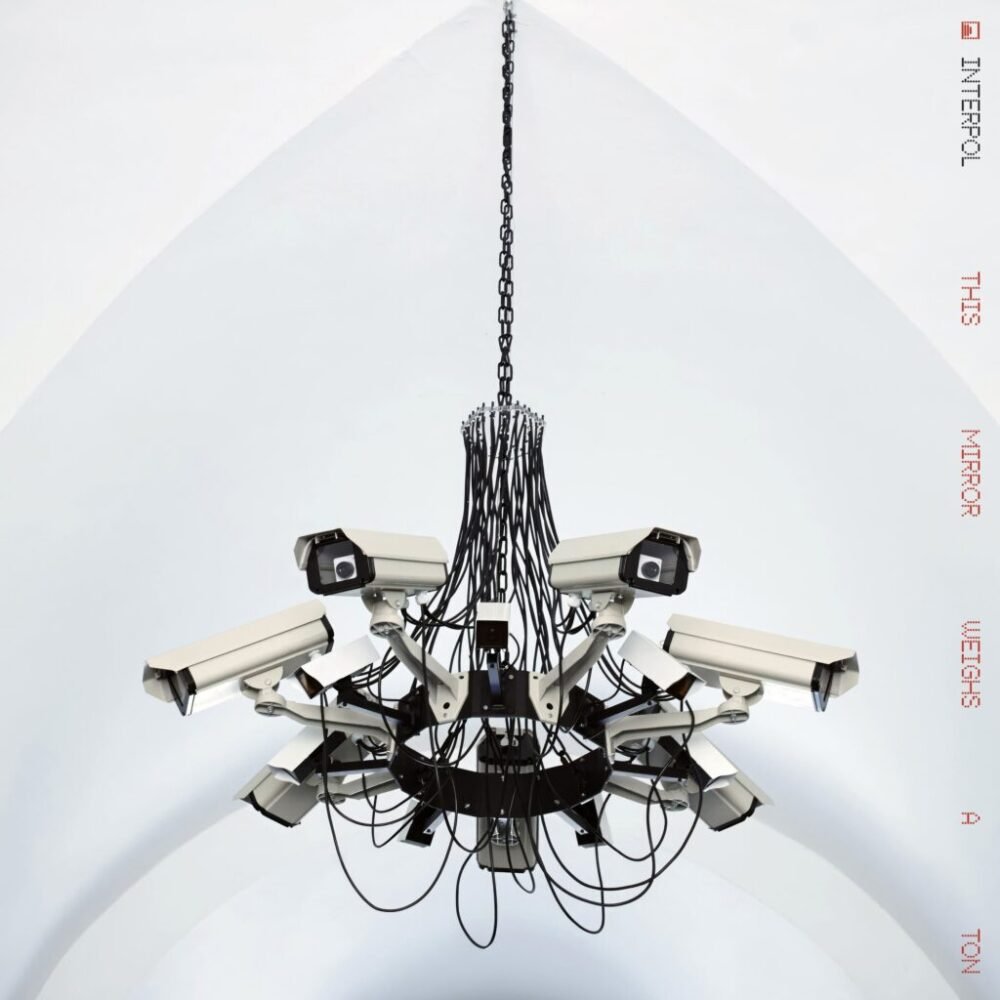
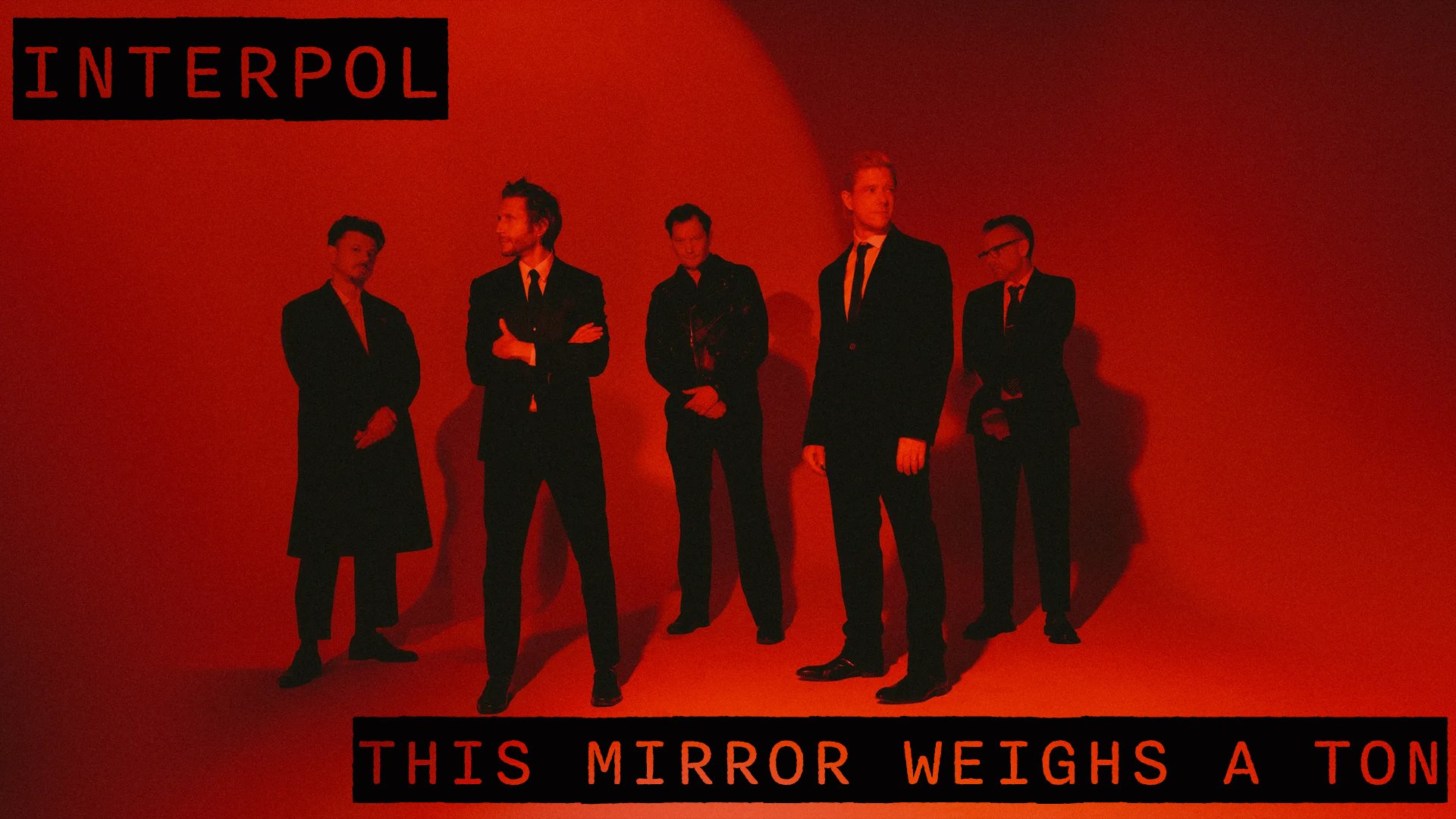
For more than two decades, INTERPOL have perfected the art of making emotional alienation sound glamorous. Since Turn On the Bright Lights, Paul Banks has populated their songs with empty streets, fractured relationships, violence, desire and nameless psychological threats, usually expressed through lyrics that feel less like narratives than fragments recovered from a dream. This Mirror Weighs a Ton, the band's eighth album, doesn't abandon that language. Instead, it turns it inward. The result is arguably INTERPOL's most reflective record.
The title is the key. Banks has described the “mirror” as representing the heaviness of self-reflection, and that idea gives the album a thematic centre missing from some of the band's more recent work. Earlier INTERPOL often made alienation feel architectural: the city became a psychological landscape, with characters moving through bars, bedrooms and anonymous streets without quite understanding why they were there. Here, the geography is more internal. The enemy isn't necessarily another person or even the city; it is consciousness itself. That makes Banks' writing especially interesting. His lyrics remain cryptic, but the obscurity feels less like an aesthetic pose and more like an attempt to describe things that resist straightforward language. On the title track, the surreal image of the "maniac in your head" sleeping in archways turns the mind into an inhabited, threatening space. The song's title phrase itself came from Banks' improvisational writing process, which helps explain its wonderfully irrational quality.
There is also a new sense of scale. The violence and apocalyptic imagery that have always lurked beneath INTERPOL’s lyrics are still here — burning mountains, soldiers, bloodshed and collapse — but they're now placed beside questions about technology, relationships and responsibility. Iron City, for instance, gestures toward humanity's relationship with AI, while other songs hold perceptions of surveillance and the difficulty of knowing what is real. That is where This Mirror Weighs a Ton differs most from Turn On the Bright Lights or Antics. Those albums were records of immediacy: desire felt dangerous, romance felt doomed, and the outside world seemed hostile. Even Our Love to Admire, with its grander arrangements, retained that sense of external drama. The new album is less interested in simply depicting darkness than in examining why we keep carrying it around. Musically, that introspection is reflected in a broader palette. Andrew Wyatt's production introduces synthesisers, strings, acoustic guitars, woodwinds and experimental textures without completely dismantling the Interpol template. The title track is the most radical example: sparse, eerie and almost weightless, it briefly suggests an INTERPOL album that might have been made by an entirely different band. Other songs return to the familiar guitar-driven tension, but now with more room for unusual rhythms, orchestration and vulnerability. The most revealing lyric may come at the end, when Banks sings, "I was born uncertain, that's what keeps me intact." It is an unusually direct statement from a songwriter who has spent years covering behind ambiguity. Rather than conquering uncertainty, This Mirror Weighs a Ton accepts it as part of being alive.
That may be the album's real evolution. INTERPOL haven't stopped being INTERPOL — the guitars still glisten, Banks still sounds like he's delivering messages from somewhere after midnight, and melancholy remains their native language. But they're not merely staring out at the darkness. They're looking at themselves in it. This Mirror Weighs a Ton is an album that deserves repeat listens, not because it will take a while to click, but because it’s really fucking good.
Hit play after the sun goes down, pour yourself a big glass of red wine in true INTERPOL style, and enjoy.
Verdict: 8/10